
River Accident Lawyer Alton, IL
If you’ve been injured in a river accident on the Mississippi near Alton, you may be facing medical bills, lost paychecks, and an insurance adjuster already asking questions about what happened. These cases aren’t like standard injury claims. Federal maritime law often controls them, and it changes who pays, how much, and under what deadline.
Our firm has focused on maritime and admiralty matters for more than 60 years. We represent seamen, river workers, and the families of those killed in river accidents. We also defend vessel owners and marine employers against similar claims, which means we know how the other side argues to reduce settlements. The stakes in river accident matters are usually high and the timelines are short. Reach out to our Alton, IL river accident lawyer when you’re ready to discuss your options.
Why Choose Goldstein and Price, L.C. for River Accident Claims in Alton, IL?
River accident cases involve federal maritime law, state tort principles, and workers’ compensation statutes.
Decades of Focused Maritime Work
Our firm has spent more than 60 years on maritime and admiralty matters specifically. That concentration shapes how we investigate, how we build a case, and how we negotiate with the carriers that insure most river work. We aren’t dabbling in this area. River accident work is what our firm does every day, and our 60+ year history reflects that focus.
Managing Member With Deep Maritime Background
Neal Settergren serves as a managing member at our firm. He earned his J.D. at Washington University School of Law, where he graduated Order of the Coif, won the Wiley Rutledge Moot Court Golden Gavel Award, and served as Articles Editor of the Washington University Law Review. His published writing on admiralty appears in the Journal of Maritime Law & Commerce and the Tulane Law Review. Neal is admitted to practice in both Missouri and Illinois, and our firm’s attorneys handle maritime matters across multiple states on the inland river system.
Experience on Both Sides of River Claims
Most maritime firms choose a side. Our firm doesn’t. We handle plaintiff-side work for injured river workers and their families. We also represent vessel owners, terminal operators, and marine insurers on the defense side of Jones Act and maintenance and cure matters. That two-sided view is an advantage when we represent you. We’ve seen how the defense builds its file. We know the arguments and how to counter them.
⭐⭐⭐⭐⭐ “I want to say thank you to Giles Howard and Joshua Stewart for helping me with my accident case. They were very prompt and efficient in every aspect. They put my mind at ease! I would most certainly use Giles and Joshua at Goldstein & Price for any future legal needs. Thanks so much again!!” — Jason Flynn
Read more reviews on our Google Business Profile.
Types of River Accident Cases We Handle in Alton
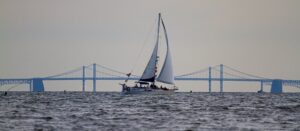 The Mississippi River corridor sees a mix of commercial and recreational vessels every day. Towboats, barges, crew boats, fishing boats, and recreational craft all share the same water. Alton sits on the Upper Mississippi just above its confluence with the Missouri River, which means river traffic here is heavier. When something goes wrong, the NTSB marine safety office and the Coast Guard often respond together on the most serious matters. Below are the river accident claims our Alton maritime attorneys handle most often.
- Towboat accidents. Crew members on towboats face line-handling injuries, machinery incidents, and falls on deck. Most towboat claims are brought under the Jones Act or general maritime law.
- Jones Act claims. Any seaman injured on the job can sue their employer for negligence. The threshold question is usually whether the injured worker qualifies as a seaman, which is a fact-specific inquiry.
- Barge accidents. Falls between barges, line-handling incidents, and barge-to-barge allisions happen routinely at fleeting areas along the river. Liability often involves the barge owner, the towing vessel operator, and sometimes a terminal.
- Recreational boating accidents. Weekend boaters on the Mississippi and Alton Lake can be hurt in collisions, wake-related falls, and operator negligence incidents. These may fall under Illinois law, federal maritime law, or both.
- Vessel collisions and allisions. Vessel-on-vessel collisions and allisions with bridges and fixed platforms raise fault and apportionment questions under the Rules of the Road and general maritime law.
- Overboard and drowning incidents. Falls from towboats and recreational vessels often involve rescue response failures or inadequate safety equipment. Fatal cases can be governed by state law, federal maritime law, or a mix of both.
- Lock and dam injuries. The Melvin Price Locks and Dam south of Alton handles heavy traffic year-round. Injuries during locking operations may implicate the vessel operator, the government, or both.
- Passenger and ferry injuries. Tour boats, dinner cruises, and ferry passengers who are hurt onboard may have claims under federal passenger vessel rules and state negligence principles.
Illinois Legal Requirements for River Accident Claims
River accidents trigger a mix of federal and state law. Which framework governs your claim depends on where and how the injury happened, the worker’s employment status, and what the vessel was doing. The applicable law changes nearly everything about a case: who you sue, what’s recoverable, and how long you have to file.
Jones Act
The Jones Act (46 U.S.C. § 30104) lets injured seamen sue their employers for negligence. Seaman status itself is contested frequently. A worker usually must spend at least 30 percent of their employment in service of a vessel or fleet to qualify.
Longshore Act
Non-seaman maritime workers, like longshoremen, shipyard workers, and harbor workers, are typically covered by the Longshore Act instead. This is a federal no-fault workers’ compensation system administered by the Department of Labor.
Illinois Wrongful Death Act
When a river accident kills a family member, state or federal wrongful death law may govern the family’s claim. The Illinois Wrongful Death Act applies in some cases. Federal maritime wrongful death doctrines apply in others. Which one controls depends on the accident’s location, the vessel type, and the victim’s job.
Filing Deadlines
Illinois allows two years for most state personal injury claims under 735 ILCS 5/13-202. Federal Jones Act and general maritime claims run under a three-year deadline. Missing either cutoff is usually fatal to the claim, so moving quickly matters.
What Damages Are Recoverable in Alton River Accident Cases?
Damages in a river accident claim depend heavily on the legal framework. A Jones Act seaman has access to a different set of remedies than a shoreside worker under the Longshore Act. A passenger on a recreational vessel has another set of laws protecting their rights. These categories aren’t mutually exclusive, and serious cases usually involve several at once.
Economic Damages
Medical bills are the primary component of economic damages. River injuries often involve orthopedic trauma, head injuries, burns, and drowning-related brain injuries that require extended treatment and sometimes lifelong care. Past medical costs are documentable through bills and records. Future costs usually require testimony from a treating physician or a life care planner.
Lost wages and lost earning capacity also apply here. If a crew member cannot return to river work after an injury, the gap between what they were earning and what they can now earn may be recoverable across their expected work life.
Seamen have a separate category: maintenance and cure. Maintenance is a daily living stipend. Cure is medical treatment. Vessel owners owe both to injured crew regardless of fault.
Non-Economic Damages
Pain and suffering is recoverable in most river accident claims. So is mental anguish, and in many cases, loss of enjoyment of life. Jones Act and general maritime law treat non-economic damages somewhat differently from Illinois tort law, and the framework that applies can change what’s available to the plaintiff.
Punitive Damages
Punitive damages are available in certain maritime matters. The most common setting is a willful failure to pay maintenance and cure. The Supreme Court’s 2009 decision in Atlantic Sounding v. Townsend confirmed this rule. Punitive recovery in straight Jones Act negligence claims is far more limited under current case law.
Survivors in a wrongful death case may recover for pecuniary loss and, depending on the controlling framework, loss of society or consortium. Fatal river accidents almost always involve a mix of state and federal doctrines that must be sorted out early in the case.
Contact Goldstein and Price, L.C.
If you’ve been hurt in a river accident on the Mississippi near Alton or lost a family member to one, the most useful thing to do right now is speak with an attorney who handles these cases routinely. We offer confidential consultations. There is no obligation to move forward after we talk.
Our injury attorney will review what happened, who was involved, what medical care you’ve received, and what documentation you have from your employer or the vessel owner. The sooner you get legal guidance, the stronger your case will be. Contact us to schedule a conversation about your river accident case.
River Accident Statistics in Alton, IL
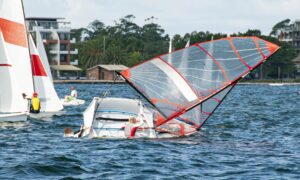 The Upper Mississippi at Alton carries a heavy mix of commercial tows and recreational craft on the same water, and the national record shows how often a day on the river turns serious. In 2024 the U.S. Coast Guard data counted 3,887 recreational boating accidents, 556 deaths, and 2,170 injuries, along with roughly $88 million in property damage. Operator inattention ranked as the leading contributing factor in those incidents. Alcohol was the leading known factor in the fatal ones.
River work and river recreation share one outcome more than any other. Drowning caused about three of every four boating deaths in the most recent federal count, and most of those who drowned were not wearing a life jacket. Nationwide, the CDC drowning data records an average of more than 4,000 unintentional drowning deaths each year. On a working river like the Mississippi, cold water, current, and passing barge traffic push those risks well past what a calm lake presents.
- Recreational boating deaths fell to 556 in 2024, the lowest yearly total the Coast Guard has recorded in more than fifty years.
- Those incidents still produced 2,170 reported injuries and close to $88 million in property damage.
- Alcohol was the leading known contributing factor in fatal boating accidents, tied to roughly 20 percent of deaths.
- Drowning was the cause of death in about 76 percent of fatal accidents, and most victims wore no life jacket.
- Operator inattention, improper lookout, and inexperience ranked among the top causes of accidents overall.
These figures describe the country as a whole, not one stretch of river, so read them as context rather than a forecast for any single Alton case. Our admiralty and maritime work focuses on the facts of the incident in front of us.
What Should You Do After a River Accident in Alton?
The hours and days after a river accident shape the claim that follows. A few deliberate steps protect both your recovery and your case.
- Get medical care right away. Orthopedic trauma, head injuries, hypothermia, and near-drowning injuries can worsen quietly or hide behind adrenaline. A prompt examination treats the harm and creates the medical record that a river accident claim later depends on.
- Report the incident. Tell the vessel operator or your employer, and confirm the accident is reported to the proper authority. Serious boating incidents on Illinois waters are reported to the Illinois Department of Natural Resources, and the Coast Guard responds to the most serious matters on the river.
- Document what you can. Photograph the vessel, the deck, the equipment, and your injuries. Write down the water conditions, the weather, and the names of everyone aboard while the details are fresh.
- Preserve records and equipment. Keep torn clothing, damaged gear, discharge notes, and any written messages you receive. In collisions and allisions and equipment-failure claims, physical evidence often settles the question of fault.
- Be careful with early statements. An adjuster may call within days of the accident. You are not required to give a recorded statement or to accept a first figure. Words offered early are frequently used later to reduce a claim.
- Watch the deadline. River accident claims run under short filing windows that change with the law that applies. Missing the cutoff usually ends the matter before it starts.
- Speak with a river accident attorney. An early review sorts out which framework governs, identifies who may be responsible, and gives you a real sense of what the claim is worth.
None of these steps requires you to have every answer at once. They simply keep the record intact while a lawyer works out how the pieces fit.
Alton River Accident Lawyer FAQs
How much does it cost to consult an Alton river accident lawyer?
We offer a confidential consultation to review your river accident, with no obligation to move forward afterward. During that meeting we look at what happened, the injuries involved, and the records you have gathered. Fee arrangements depend on the type of matter, and we explain them in plain terms before any agreement is signed. You leave the conversation understanding your options, whether or not you retain our firm.
Do I have a Jones Act claim or a different type of river accident case?
It depends on your job and your connection to a vessel. A seaman injured in service of a vessel may have a Jones Act claim against the employer. A dockside or shoreside worker often falls under a separate federal framework instead, and an injured passenger may have an ordinary personal injury claim. Seaman status is contested often because it decides which protections apply. That threshold question is usually where a river accident attorney starts.
How long do I have to file a river accident claim near Alton?
Deadlines change with the framework. Illinois allows two years for most state personal injury claims, while federal Jones Act and general maritime claims generally run three years from the date of injury. Wrongful death claims carry their own timing. Because a single river accident can involve more than one framework, the safest course is to have the deadline confirmed early rather than assume the longest one applies.
What if I was partly at fault for the river accident?
Partial fault does not automatically end a claim. Under general maritime law, a seaman’s own negligence reduces recovery in proportion to fault but does not bar it. Under Illinois law, a claimant found more than 50 percent at fault recovers nothing, and a smaller share reduces the award. Which rule governs turns on the framework that applies to your accident, so the same conduct can carry different consequences.
Who can be held responsible for a river accident?
More than one party often shares fault. A vessel operator, an employer, a barge owner, a terminal, or an equipment manufacturer may each bear a portion. A vessel owner can also face an unseaworthiness claim when a defect in the vessel or its gear contributed to the harm. Identifying every responsible party early is frequently the difference between a partial recovery and a full one, because a company rarely volunteers its own role.
Should I speak with the insurance company after a river accident?
Be cautious. An adjuster’s job is to close the file for as little as possible, and an early recorded statement can be used against you. You are not obligated to provide one. A dispute over insurance coverage can follow a serious river accident, and how the first conversations are handled often shapes the rest. It is reasonable to speak with an attorney before you speak with the carrier.
Do river accident cases settle or go to trial?
Most resolve through negotiation during or after discovery, once the medical picture and the fault questions are clear. Some do not, and those proceed to trial, where a Jones Act plaintiff has the right to a jury. We prepare every matter as though it will be tried, and our case results reflect that approach. Preparation is what gives a settlement discussion weight in the first place.
How is a river accident claim different from an ordinary injury claim?
The governing law is the main difference. A river accident on navigable water can fall under federal maritime law, which carries its own deadlines, defenses, and categories of damages, rather than the Illinois tort rules that would govern a crash on land. That distinction changes who you sue, what is recoverable, and how the case is proved. It is why river accident matters reward a lawyer who works in this area regularly.
Important Resources for Alton River Accident Cases
Most Dangerous Locations for River Accidents in Alton, IL
River accidents cluster where traffic, current, and fixed structures meet, and a few points near Alton see more trouble than others.
High-traffic river areas:
- Pool 26 and the Alton waterfront, where commercial tows and recreational boats share a narrow channel
- The Mississippi and Missouri confluence just downstream, where merging currents and crossing traffic raise collision risk
- Fleeting areas where barges are made up and broken down, a common site of line-handling injuries
Locks, dams, and crossings:
- The Melvin Price Locks and Dam, which moves heavy commercial traffic through its chambers near Alton year-round
- The Clark Bridge, where the U.S. Route 67 span crosses the Mississippi at Alton
- Wing dams and submerged structures along the pool that can catch a hull or an overboard victim
What Are Important Local Resources for Alton River Accident Cases?
The organizations below can help after a river accident on or near the Mississippi at Alton. Keep names and numbers handy for medical care, incident reporting, and records.
- Alton Police Department: (618) 463-3505
- Alton Memorial Hospital: (618) 463-7311
- Illinois DNR: (217) 782-6302, for boat registration and boating incident reporting
These resources are listed for information only. Their inclusion is not an endorsement, and no affiliation with our firm is implied.
About Goldstein and Price, L.C.
Goldstein and Price, L.C. has concentrated on admiralty and maritime law since 1957, and that focus carries into every river accident matter we handle. Douglas Gossow, a member of the Maritime Law Association of the United States, has tried and appealed maritime cases for more than three decades and earned his law degree at the University of Missouri. Our attorneys have secured summary judgment for vessel interests in Jones Act injury cases and favorable rulings in inland river matters, including a proceeding that addressed how a government lock-damage claim fit within a vessel owner’s limitation of liability.
What Our Clients Say
⭐⭐⭐⭐⭐ “I can’t recommend Jake and the team at Goldstein and Price enough. They made an incredibly stressful situation so much easier and achieved a result that made a huge difference for me. From start to finish, Jake was responsive, professional, and always willing to answer my questions.” – Harry Pardo
Read more reviews on our Google Business Profile.
Additional Resources for Alton River Accident Cases
- Is It Too Late to File My Claim for River Injuries?
- Who Qualifies as a Jones Act Seaman?
- The Dangers of Shared Waterways
- I Work on the River. Why Am I Not Eligible for Workers’ Compensation?
- 5 Questions for Your Boating Accident Consultation
Contact Goldstein and Price, L.C.
A river accident on the Mississippi can leave a family with medical bills, lost income, and hard questions about who is responsible. If that is where you stand near Alton, the next step is a conversation with attorneys who handle these claims regularly. We offer a confidential consultation and will review what happened, the care you have received, and the documentation you hold. You will get a straight read on whether a claim makes sense and what pursuing it would involve. Our office responds promptly to new inquiries. Contact us when you are ready to talk through your river accident case.